
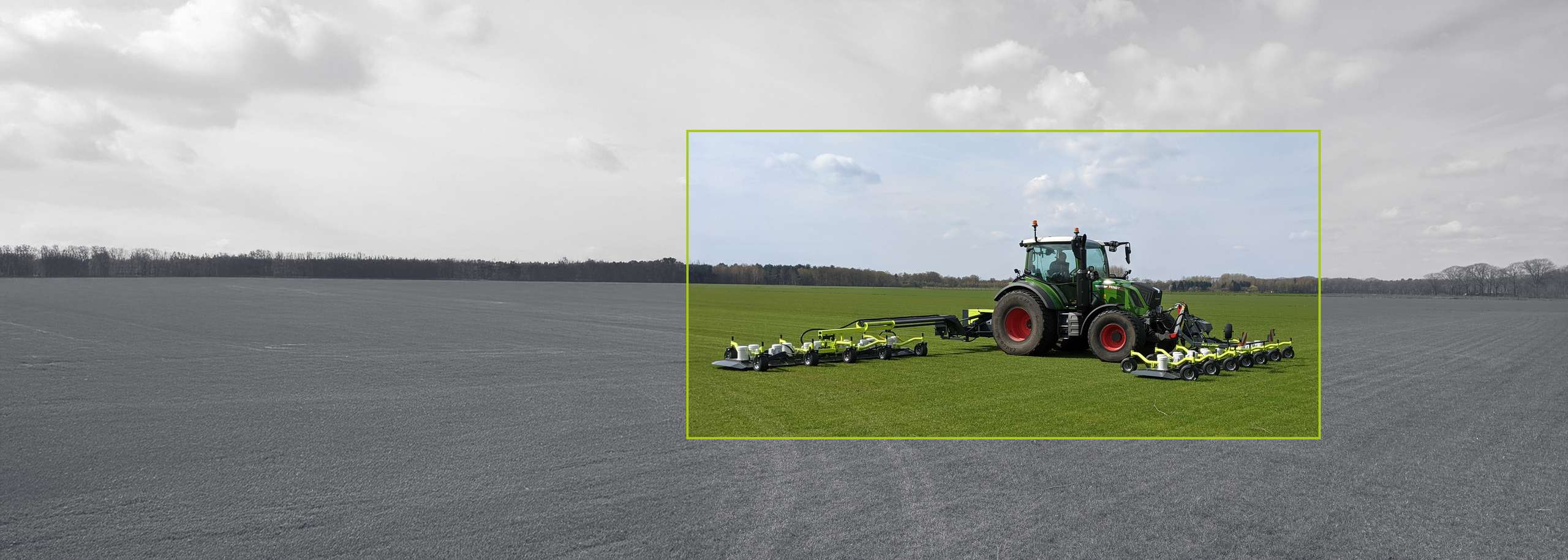
Turfgrass Production
Turfgrass production
Frequent mowing is essential for fast and consistent turfgrass production.
To stimulate dense growth and shorten the production cycle, only a small amount of grass should be removed per cut. This requires mowing at regular intervals and at the right moment.
In practice, weather conditions often limit this strategy.
Many conventional mowing systems are sensitive to wet grass and soft soil conditions. As a result, mowing is postponed, growth becomes uneven and larger volumes of grass residue need to be removed later in the process.
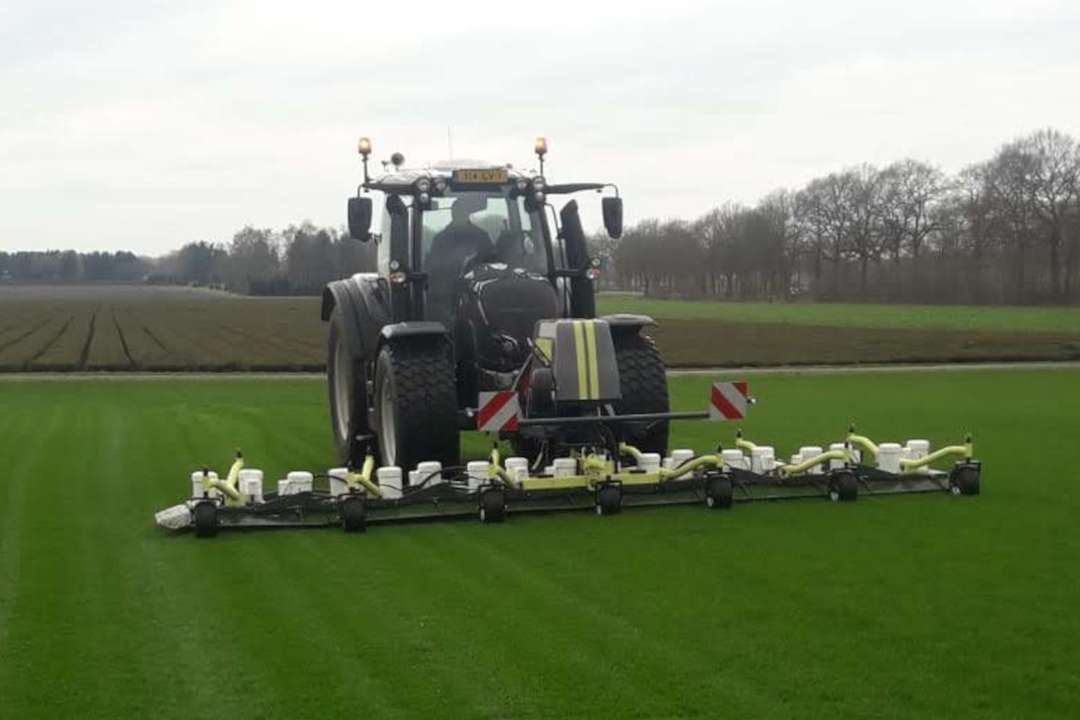
Eco Clipper mowing systems are designed to operate reliably under wet conditions.
This makes it possible to maintain the intended mowing frequency, even when weather conditions are less favourable. By mowing on time, turfgrass producers can accelerate crop development while reducing the need to remove excess grass material.
High mowing capacity is essential to keep operations efficient.
A high-capacity system reduces the number of tractor hours and labour input required, helping to control operating costs while maintaining consistent mowing quality across larger acreages.
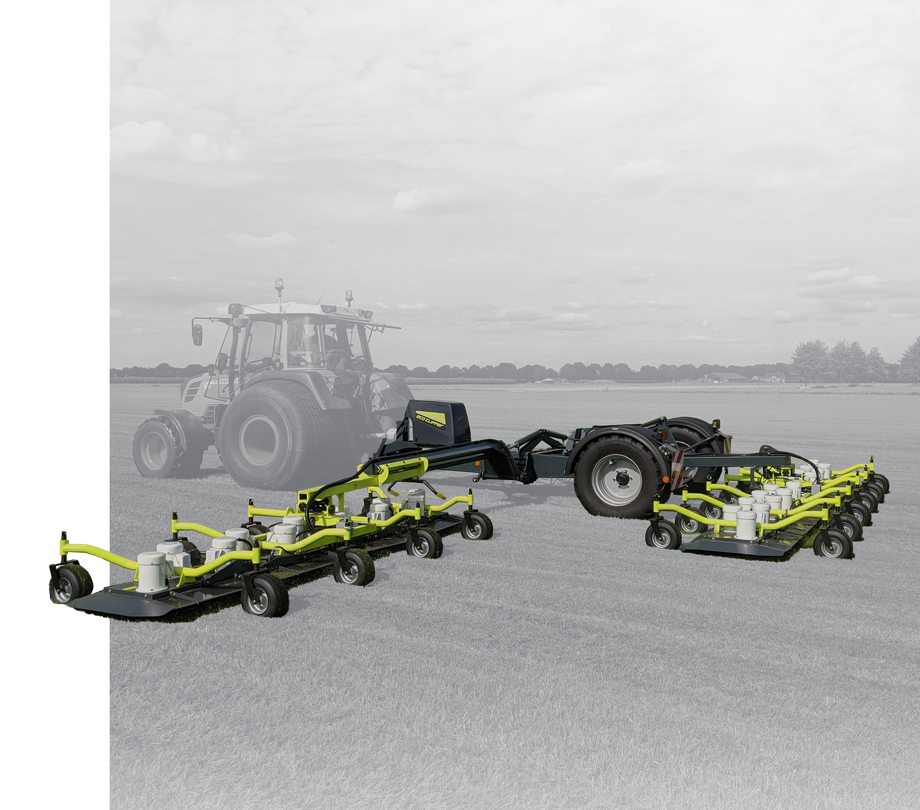
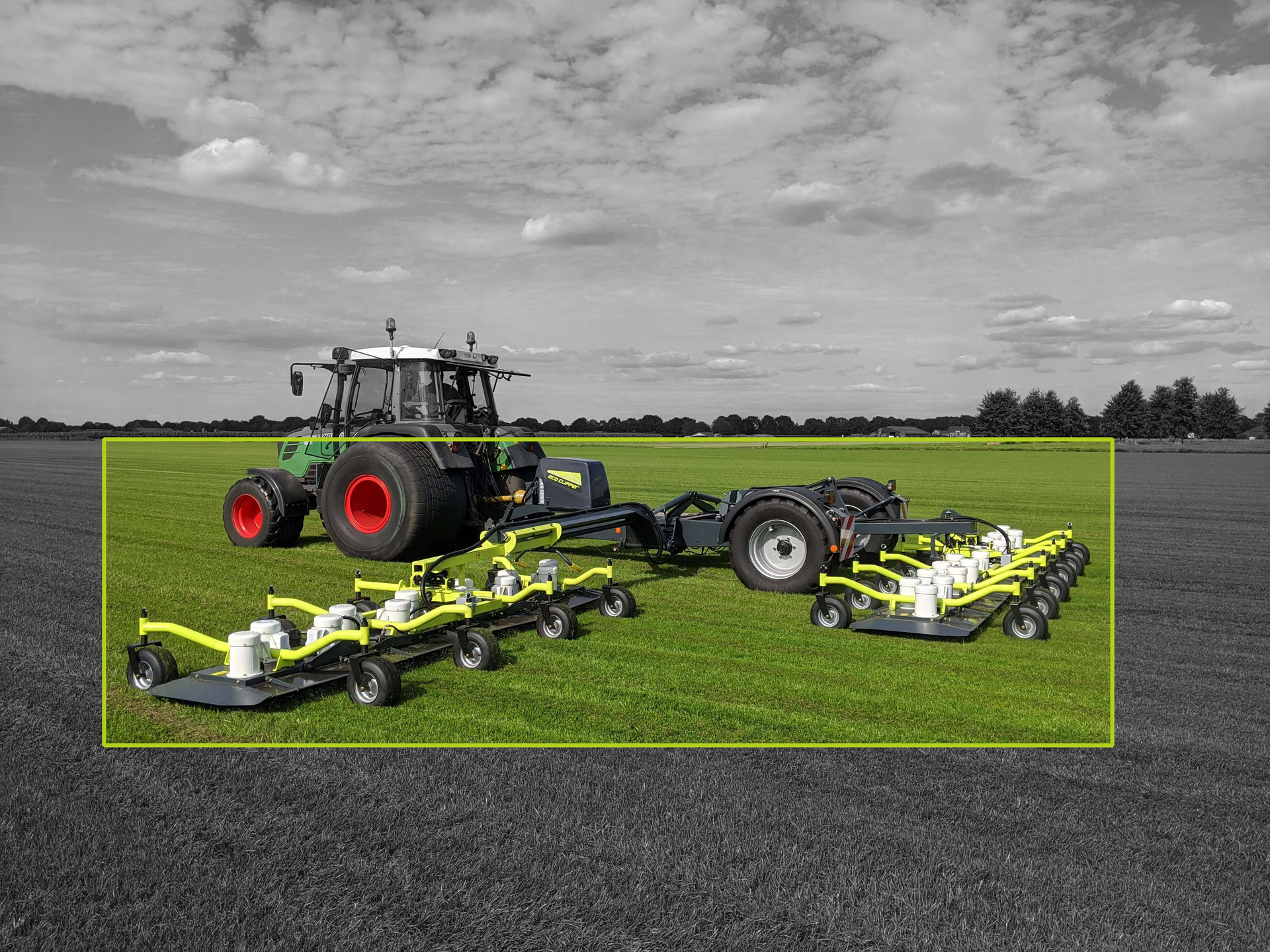
use case from our customers
Key considerations for turfgrass production
Mowing performance
- High cutting capacity with wide working widths
- High mowing speeds while maintaining consistent cutting quality
Operational reliability
- Reliable mowing performance, including in wet grass conditions
- Even clipping distribution, reducing the need for grass residue removal
- Minimal soil compaction, supporting consistent turf quality
Cost efficiency
- Low power requirement, allowing the use of lighter tractors
- Reduced tractor hours and labour input per hectare
- Low mowing cost per hectare, particularly on larger acreages
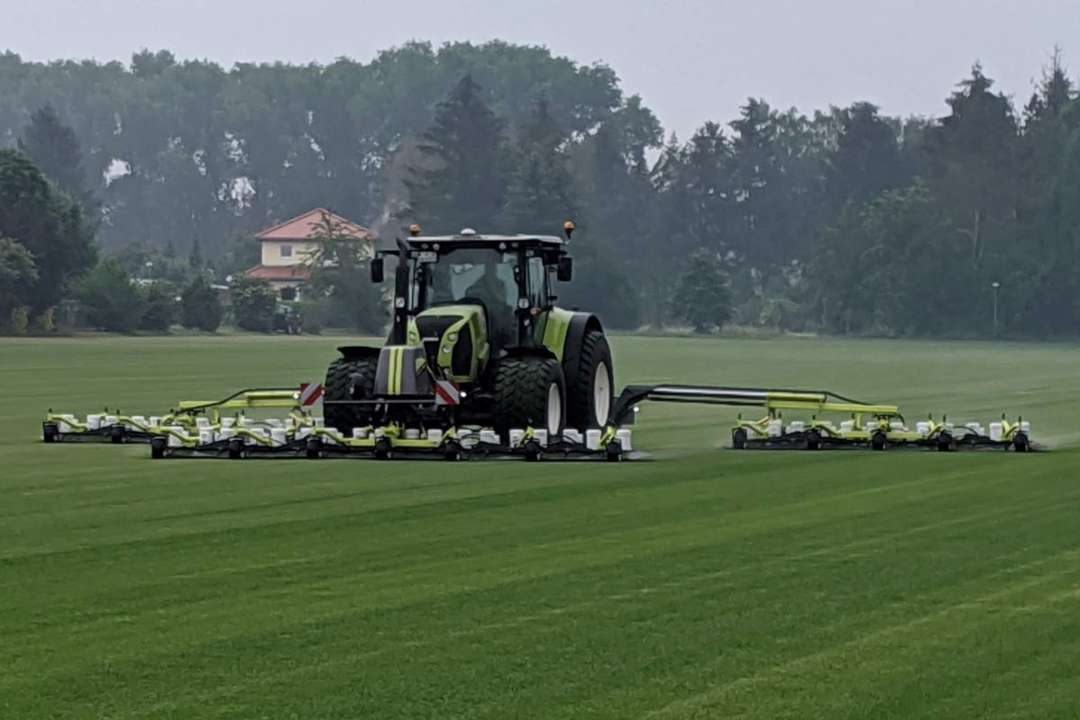
Configuration Options
Eco Clipper mowing systems are available in multiple configurations to match different field layouts, tractor capacities and operational preferences. By selecting the appropriate configuration, turfgrass producers can optimise mowing capacity, weight distribution and manoeuvrability to suit their specific production conditions.
Following grass growth
Frequent mowing stimulates root development
Frequent mowing, where no more than one third of the grass height is removed per mowing cycle, supports rapid sod development and results in a denser, stronger turfgrass mat. This approach allows turfgrass to reach harvest readiness sooner while maintaining consistent quality.
Because only a small volume of grass is cut each time, mowing can be performed at higher working speeds and grass clippings rarely need to be collected or removed. This significantly reduces labor, logistics, and downtime, while valuable nutrients remain in the turfgrass system.
To maintain such a high mowing frequency, the mower must perform reliably under wet conditions, reducing dependency on weather windows. Eco Clipper electric mowing systems are specifically designed to cut cleanly in wet grass, enabling growers to follow grass growth closely and apply an optimal, efficient turfgrass production practice.