High Capacity Autonomous Mowing
Why autonomous mowing?
Our wide and fast Eco Clipper mowing systems already reduce cost per hectare significantly compared to traditional systems. This is achieved through high mowing capacity, energy-efficient electric drives, and low maintenance requirements — resulting in fewer tractor and labour hours per hectare.
To reduce costs further, labour input must decrease. Autonomous mowing addresses this by removing the need for an onboard operator and enabling long, uninterrupted working runs.
For autonomy to be economically viable, a machine must combine high capacity with long unattended operating windows.
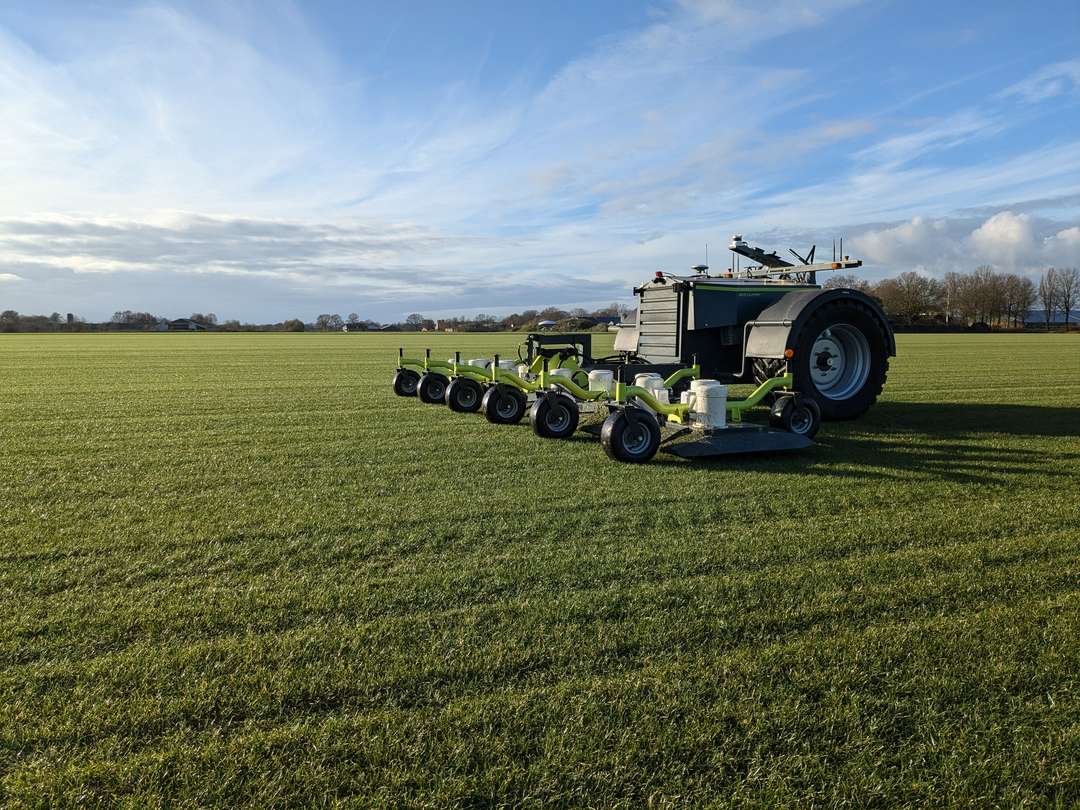
The Eco Clipper AM is our dedicated autonomous mower, engineered around our electric spindle drive and wide-format decks. Under typical conditions, it delivers capacities of up to 6 hectares per hour and is designed for long operating windows and straightforward service.
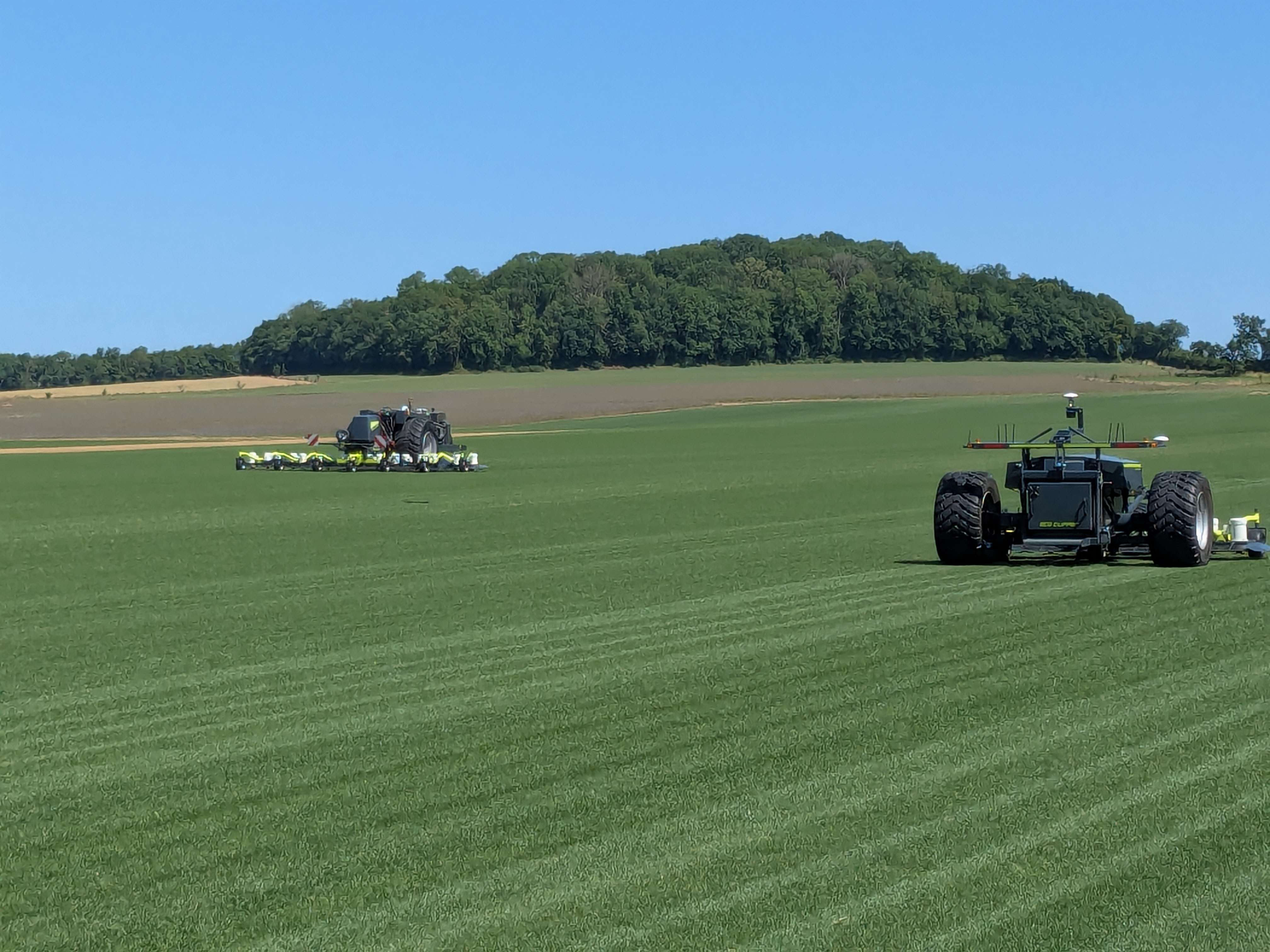
In addition, we integrate our mowing systems with autonomous tractor platforms — for example, AgXeed — to provide efficient robotic solutions where a dedicated autonomous platform is not preferred.
High-Capacity Autonomous Solutions
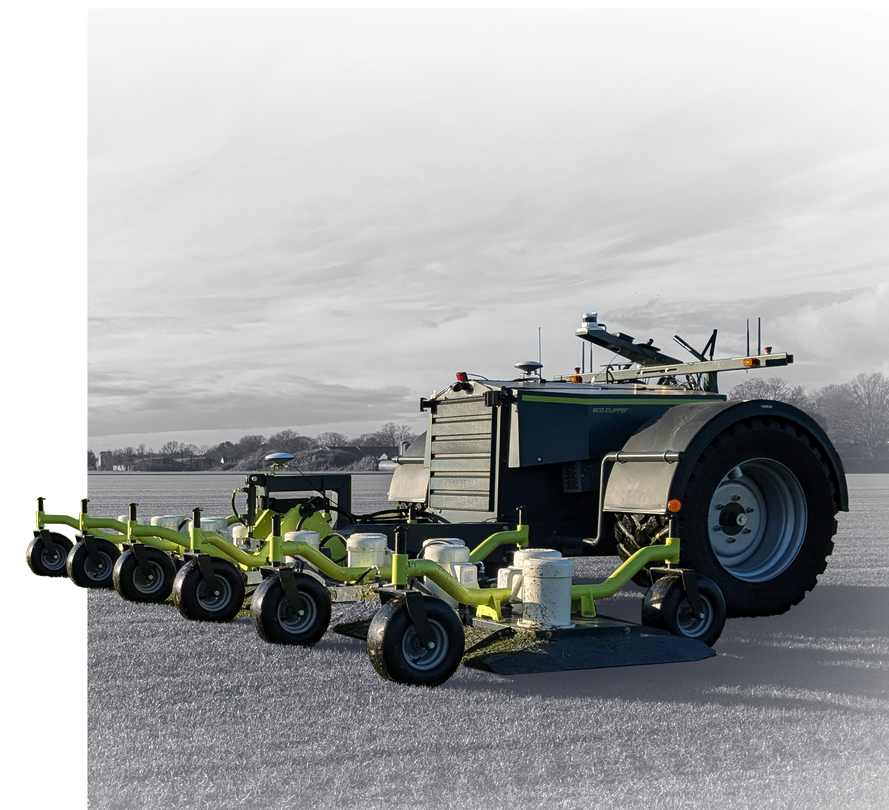
Eco Clipper offers two routes for high-capacity autonomous mowing up to 6 ha/h:
- Eco Clipper AM – dedicated autonomous mowers with working widths of 3.09 m or 5.13 m (optional diesel-hybrid or fully battery-electric)
- Eco Clipper FM6 AgXeed – Eco Clipper FM6 mowing systems integrated with autonomous 3- or 4-wheel AgXeed tractor platforms (optional PTO-driven generator or 700 VDC inverter supply)
Safety & compliance
Safe field operation without an onboard operator
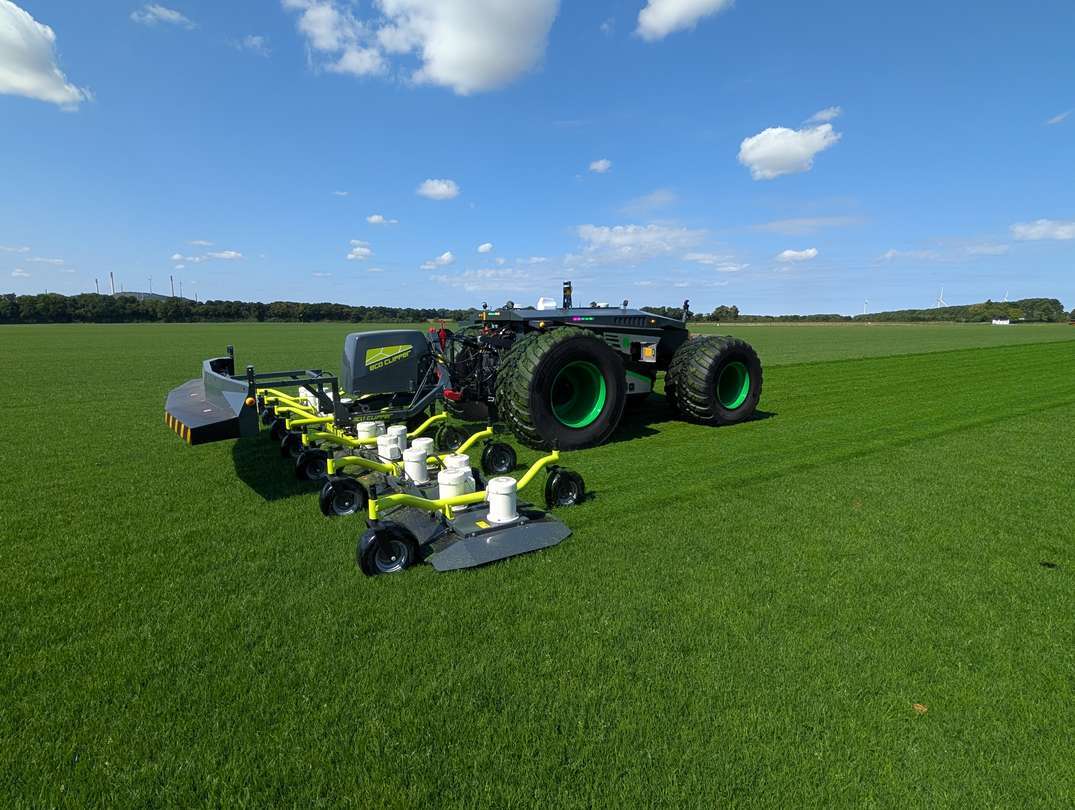
To operate a large autonomous mower at working speeds of up to 16 km/h without an operator, a proven safety system is essential. In collaboration with AgriRobot and with the support of RISE (Ri.se), we have developed a safety system for the Eco Clipper AM.
The Eco Clipper AM safety solution combines fused sensor systems for obstacle detection and geofencing. These sensors are designed with individual safety levels and together form a complete safety architecture in accordance with:
- ISO 18497 (Safety of highly automated agricultural machines)
- ISO 13849 / ISO 25119 (Functional safety requirements for agricultural machinery)